
Grimani Systems and Maria Deschamps Integrate Acoustical Engineering and Interior Design in a Constrained Home Theater
A manufacturer–designer collaboration demonstrates how detailed system engineering, architectural coordination and manual calibration supported cinema-level performance within strict spatial and aesthetic limits.
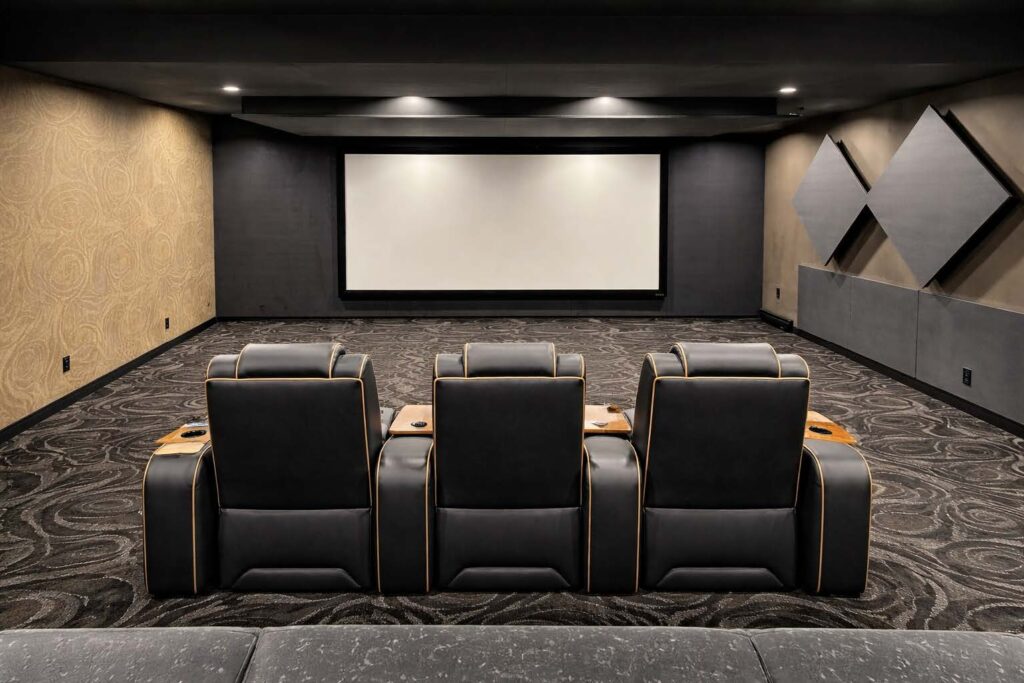
When the client first reached out to interior designer Maria Deschamps, the project’s scope was still taking shape. He was in the early stages of planning a dedicated home theater and had not yet finalized an audiovisual integrator. However, he knew that sound quality would be the priority and that the available theater space imposed clear limitations that would require careful coordination between design and engineering.
Educated in San Francisco and based in Montreal since the mid-1980s, Deschamps brings decades of experience in retail, commercial and residential design. Her residential work has increasingly focused on private home theaters, where architectural constraints, aesthetics and technical performance must align. As discussions with the client progressed, she recommended several trusted integrators. The client ultimately selected AVA Systemes, a choice Deschamps welcomed based on prior collaborations.
As system discussions advanced, Patrice Bouchard, owner of AVA Systemes, proposed working with Grimani Systems. For Deschamps, the recommendation was immediately compelling. “I had met Anthony Grimani years ago and always wanted to work with him,” she said. “He has a strong reputation, and his understanding of acoustics is well known.”
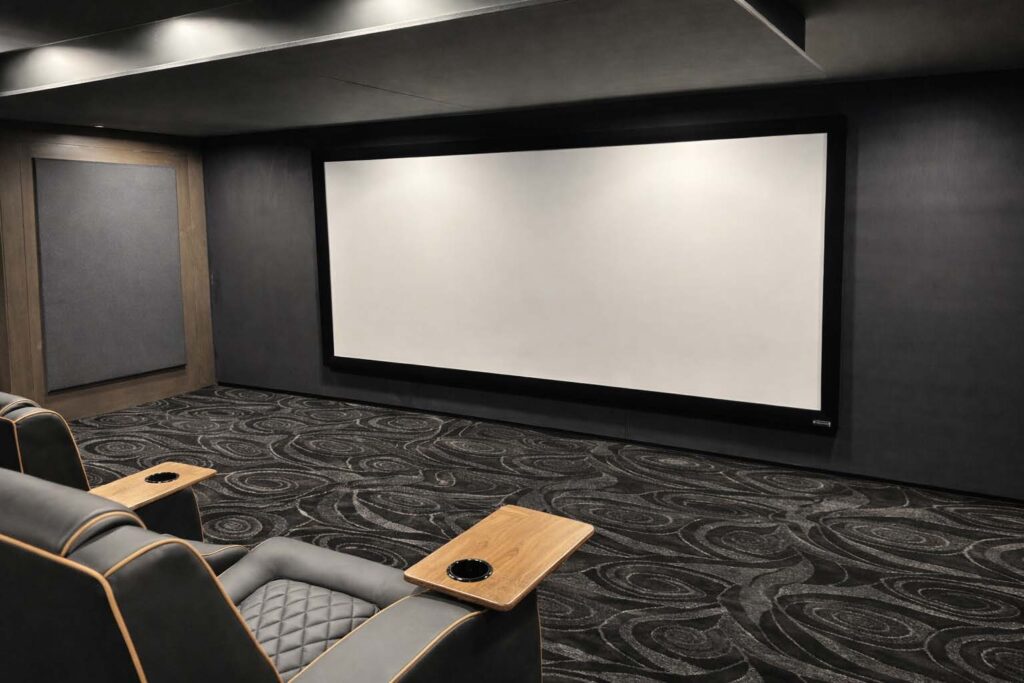
The project itself presented an extensive set of challenges. The theater was confined to a nearly square room, with a structural column that could not be removed and a shallow niche raised questions about whether it should be filled or used to house equipment. Ultimately, the niche proved to be an effective location for a subwoofer, but it required coordination between design intent and system requirements.
Further complexity came from the room construction. One wall was existing, another was newly built, and the front wall was packed out to accommodate the screen and loudspeakers. As a result, the design incorporated a combination of in-wall, surface-mounted and concealed speakers, along with acoustic panels and diffusers. Each decision affected acoustics, sightlines, finishes and room proportions.
“Even though the room was small, it was very complex,” Deschamps said. “Every wall condition was different, and that affected what type of speaker and acoustic treatment could be used.” From a design perspective, Deschamps typically works closely with integrators but rarely directly with manufacturers. In this case, Grimani Systems’ involvement proved essential.
Beyond supplying loudspeakers, the company provided detailed engineering documentation that integrated acoustics, equipment and architecture into a single, coordinated plan.
Once Deschamps shared the preliminary aesthetic design and room layouts, AVA Systemes and Grimani Systems finalized loudspeaker selections with the client. Grimani Systems then produced a complete set of engineering drawings that included color-coded speaker locations, acoustic materials, diffusers and detailed references. Grimani Systems supplied three-dimensional CAD drawings that clearly illustrated speaker placement, while detailed installation instructions
supported coordination with the contractor.
“The plans were very easy to review and understand,” Deschamps said. “Everything was clearly indicated, which allowed me to quickly verify proportions, clearances and how the acoustic elements would fit into the design.”
The level of documentation from Grimani Systems allowed Deschamps to provide timely feedback and suggest refinements without disrupting the schedule. The project included a few minor adjustments made late in the process, but they were informed changes rather than corrections. According to Deschamps, the clarity of the plans reduced uncertainty and simplified communication between all parties.
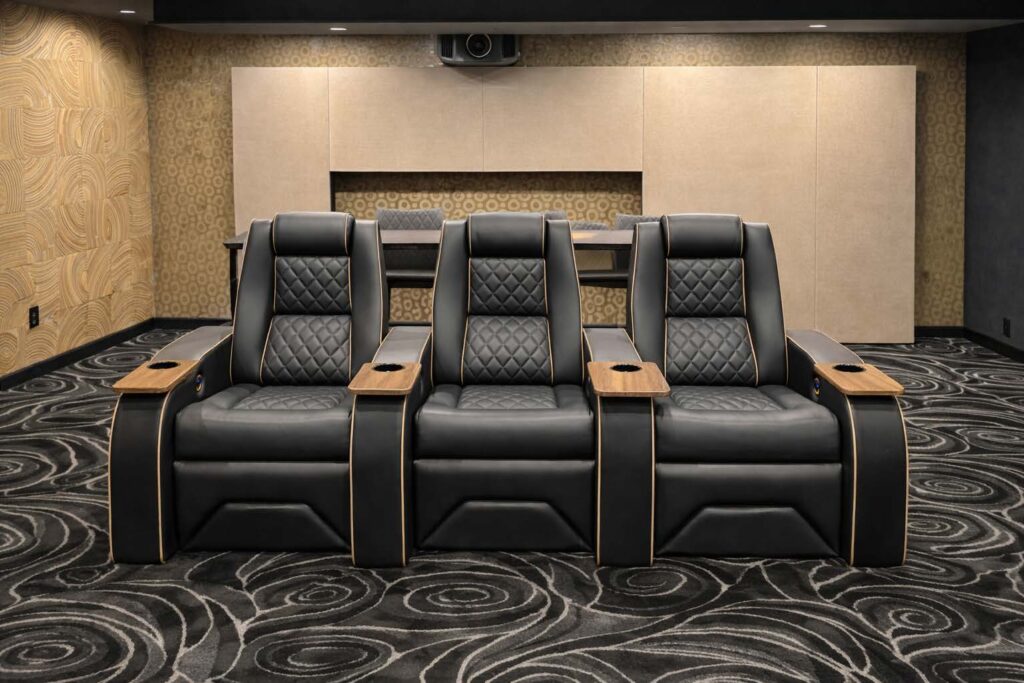
Throughout the project, collaboration remained central to the overall success. The audio performance drove many decisions, and Deschamps emphasized that aesthetics could not be considered in isolation. “For me, it’s never just about how the room looks,” she said. “The final result has to support the sound, especially for a client who was focused on audio from the very beginning.”
During commissioning, Anthony Grimani traveled to Montreal to perform manual calibration. For Deschamps, his on-site involvement strengthened the system’s design. “Patrice insisted from the start that Anthony calibrate the room,” she said. “It was an essential part of the project.” This is something Grimani Systems also insists on to guarantee the best possible outcome for the client.
From a designer’s perspective, the project demonstrated the value of early and detailed
collaboration between interior design, integration and system engineering. “If we hadn’t all been on the same page, it wouldn’t have worked,” Deschamps said. “Because of the constraints, collaboration wasn’t optional.” From a design standpoint, the project highlighted the advantages of Grimani Systems’ integrated approach to loudspeaker design, acoustics and documentation. By providing system-level engineering, detailed drawings and clear installation guidance, Grimani Systems enabled close alignment between performance requirements and architectural intent. The project showcased how a manufacturer-led methodology can support complex residential environments, allowing interior designers and integrators to work with confidence while delivering consistent, cinema-level performance within strict spatial constraints.