
AVA Systemes Selects Grimani Systems to Deliver Reference-Level Cinema Performance in a Constrained Residential Space
Grimani Systems’ loudspeaker architecture and calibration methodology enables AVA Systemes to overcome fixed room geometry and deliver true cinema-level performance.
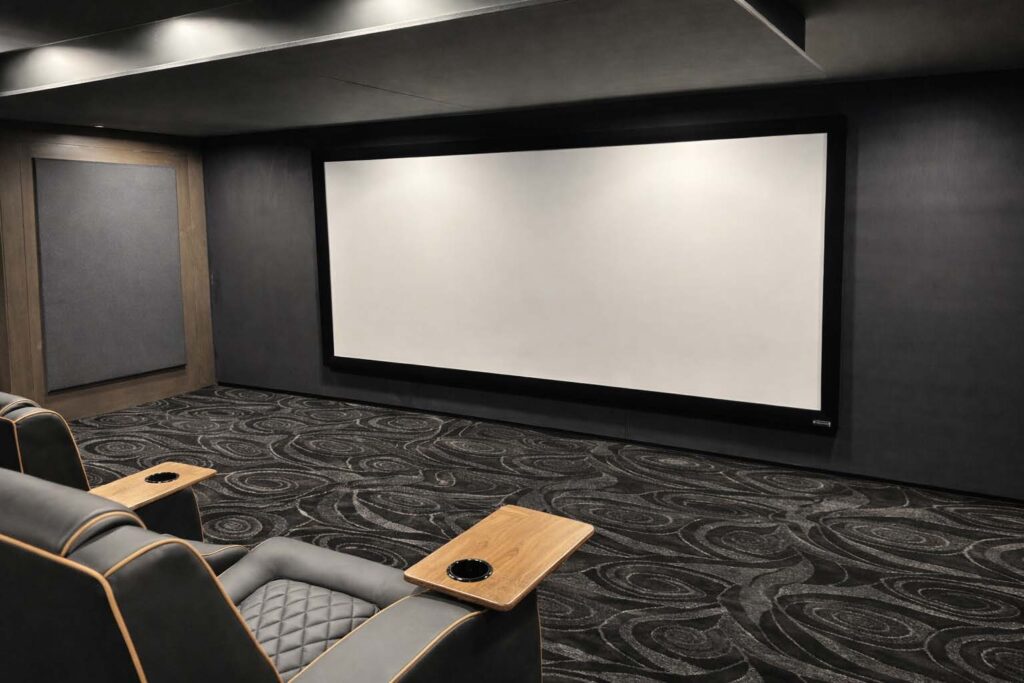
Building a reference-level home theater inside a constrained residential space presents a familiar challenge for integrators. In this case, the available footprint was limited to a roughly 20-by-20foot room with nearly square proportions and structural elements that could not be altered. Despite those limitations, the client demanded cinema-level performance, placing a premium on careful coordination between room construction, system design, and calibration.
For Montreal-based AVA Systemes, the project aligned closely with its engineering-first approach to audiovisual integration, home automation, and smart living technologies. Rather than adapting a conventional residential theater package to fit the space, AVA Systemes approached the project as a ground-up design, evaluating the room’s physical constraints alongside the client’s performance goals.
The project began with a complete rebuild of the room. The existing walls and ceiling were removed, sound isolation was added, and the space was reconstructed from the ground up. While the rebuild allowed AVA Systemes to address noise control and infrastructure under the guidance of Grimani Systems’ room engineering, the fundamental geometry of the room remained unchanged. Its nearly square layout posed inherent challenges for low-frequency behavior. Additionally, design constraints also prevented the removal of a structural column and beam, further limiting layout options.
“The biggest challenge was working within a space that had clear physical limits,” said Patrice Bouchard, owner of AVA Systemes. “We could rebuild the room, but we could not change its proportions or eliminate the column.”
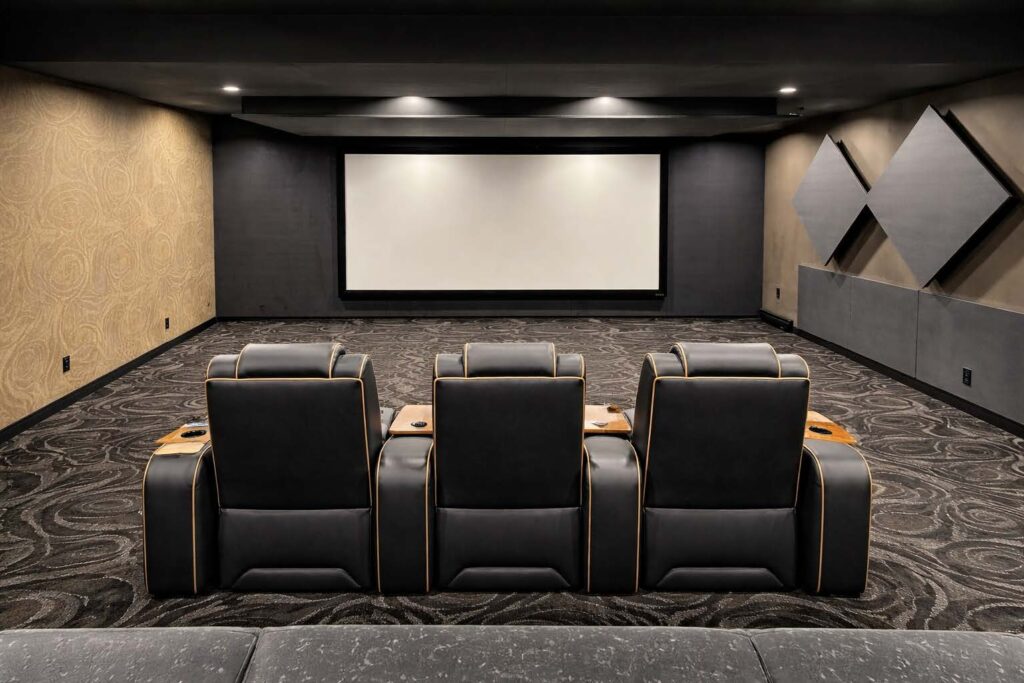
Given the room’s constraints, AVA Systemes proposed a Grimani Systems–based engineering and speaker solution. The approach differed from the conventional residential theater designs commonly offered in the local market, which typically rely on consumer audiovisual receivers and passive loudspeakers. Instead, the system architecture centered on active loudspeakers with AES67 audio over IP network, and digital signal processing.
Bouchard’s prior experience with Anthony Grimani influenced the decision. “I trained with Anthony years ago and was impressed by his understanding of acoustics and system design,” he said. “What stood out was how the speakers, amplification, and DSP were designed to work together as one system.”
Following the proposal, the client conducted independent research, reviewing technical material and online content related to Grimani Systems and the calibration process. According to Bouchard, that research helped reinforce confidence in the approach. “Most integrators proposed similar systems with familiar brands. We presented a solution that addressed the room in a different way, and the client understood why.”
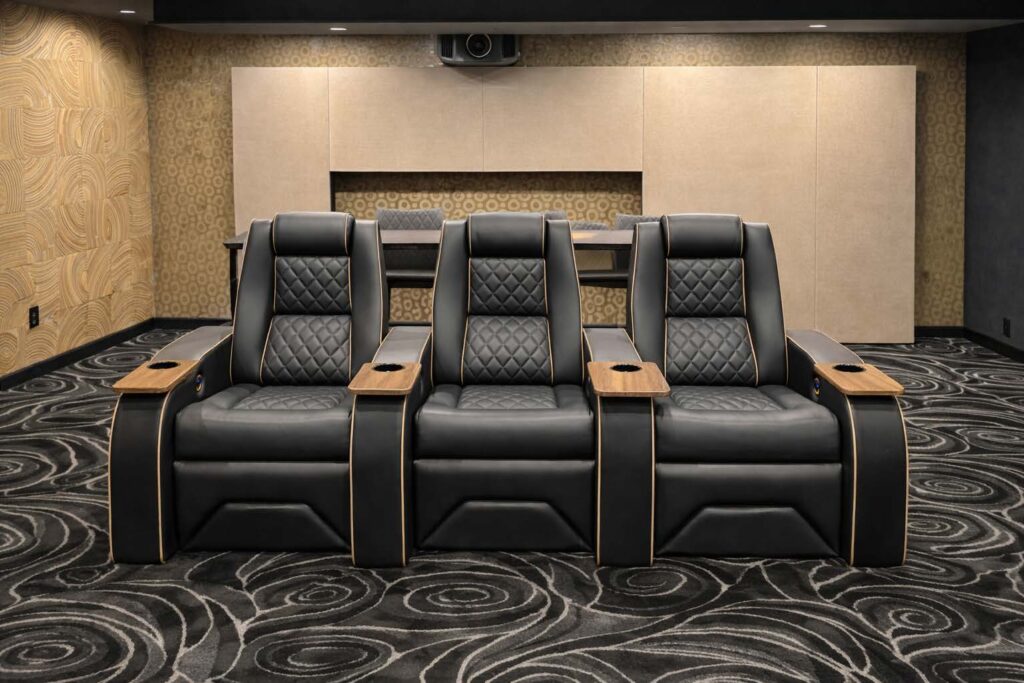
Grimani Systems provided detailed system engineering documentation, including loudspeaker placement, signal routing, and amplification requirements. This was AVA Systemes’ first installation using Grimani Systems; the plans were so comprehensive that it made the process very straightforward and error-free.
During commissioning, calibration focused on manually aligning loudspeaker timing, phase, and frequency response to compensate for the room’s acoustical thumbprint. The system was tuned as a reference-grade dedicated cinema environment.
“The system already sounded extremely good before calibration,” Bouchard said. “After the measurements and adjustments were completed, the improvement was immediately clear.”
Following completion, the client expressed a high level of satisfaction with the theater’s performance. For AVA Systemes, the project stands out as a benchmark installation. “This is the best home theater realization I’ve completed,” Bouchard said. “The room layout, the system design, and the calibration all worked together.”
While not every homeowner requires this level of technical involvement, Bouchard noted that for clients who understand and value performance, it can be decisive. “For the right customer, this approach makes a measurable difference.”
The project highlighted the strengths of Grimani Systems’ approach to room and loudspeaker design, system architecture, and calibration, even in environments with limited flexibility. By integrating active loudspeakers, advanced amplification with digital signal processing, the system provided the control necessary to address challenging room geometry and fixed structural constraints. The result demonstrated how Grimani Systems’ methodology can deliver consistent, cinema-level performance in residential spaces where conventional designs fall short.
Download this Case Study as a PDF here.